
Hubble Captures the Giant’s Roaring Storms and Volcanic Moon Io
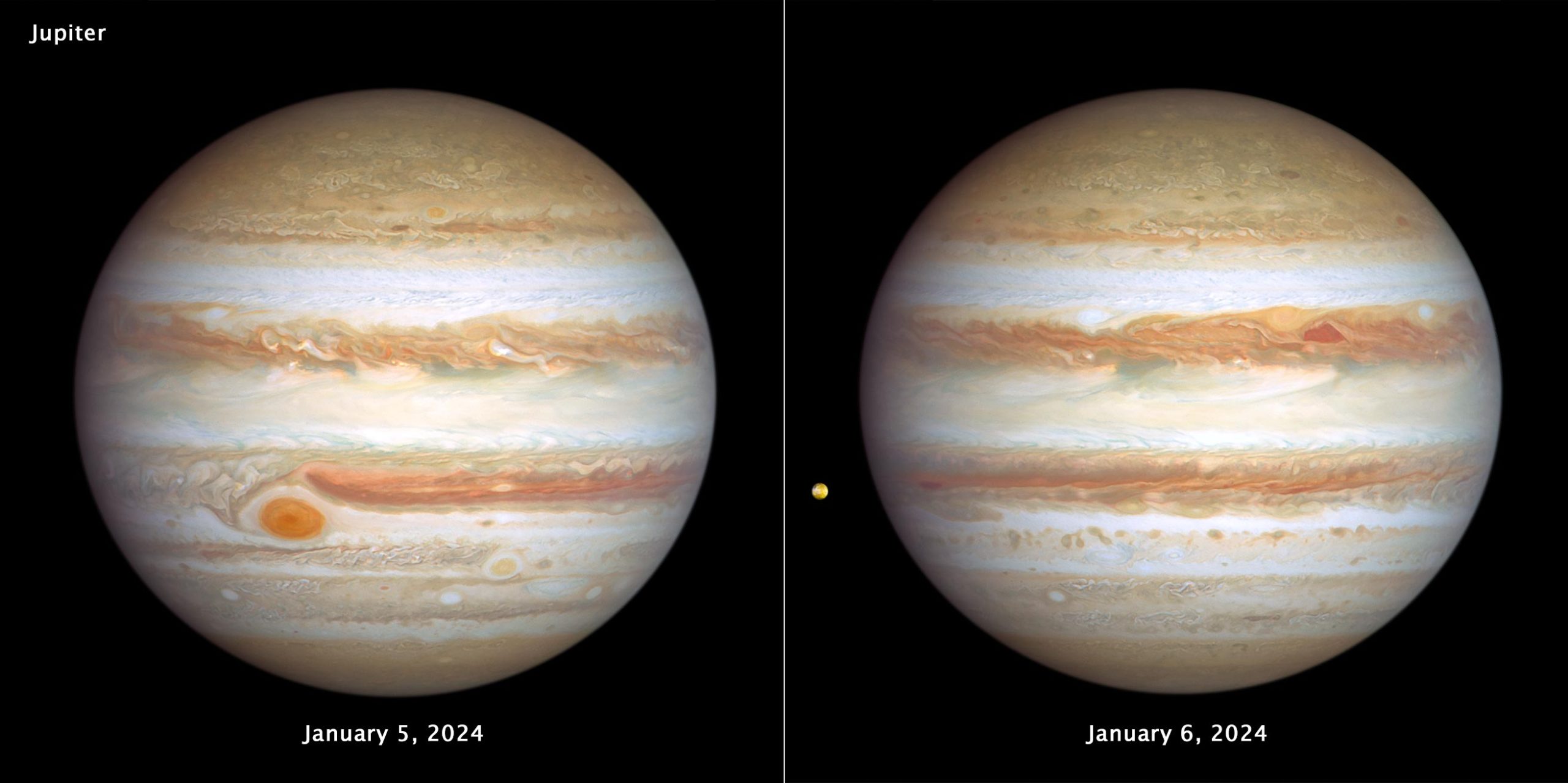
NASA’s Hubble Space Telescope captured new images of Jupiter on January 5-6, 2024, revealing dynamic weather patterns and notable storms like the Great Red Spot and Red Spot Jr. The observations are part of the annual Outer Planet Atmospheres Legacy program, which also highlighted Io’s volcanic activity and surface features. Credit: NASA, ESA, STScI, Amy Simon (NASA-GSFC)
Cyclones, Wind Shear, Violent Storms Churn in Jupiter’s Atmosphere
The largest and nearest of the giant outer planets, 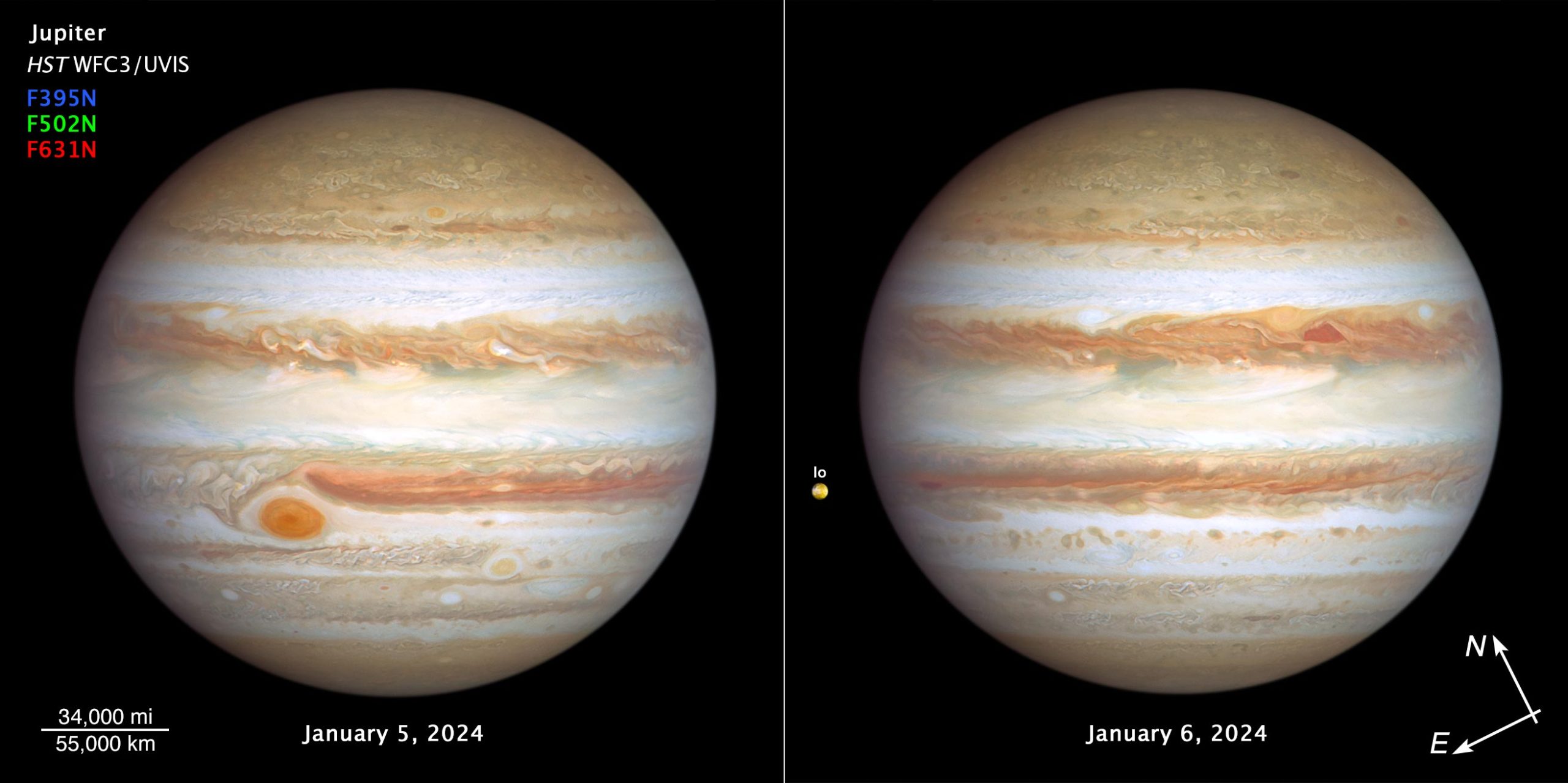
Jupiter is banded in stripes of brownish orange, light gray, soft yellow, and shades of cream. Many large storms and small white clouds punctuate the planet. The largest storm, the Great Red Spot, is the most prominent feature in the left bottom third of this view. To its lower right is a smaller reddish anticyclone, Red Spot Jr. Another small red anticyclone appears near the top center of the image. At upper right of center on the right image, a pair of storms appear next to each other: a deep-red, triangle-shaped cyclone and a reddish anticyclone. Toward the far-left edge of the image is Jupiter’s tiny moon Io. The variegated orange color is where volcanic outflow deposits are seen on Io’s surface. Credit: NASA, ESA, Amy Simon (NASA-GSFC)
Hubble Space Telescope Tracks Jupiter’s Stormy Weather
The giant planet Jupiter, in all its banded glory, is revisited by Outer Planet Atmospheres Legacy program (OPAL). This is because these large worlds are shrouded in clouds and hazes stirred up by violent winds, causing a kaleidoscope of ever-changing weather patterns.
[left image] – Big enough to swallow Earth, the classic Great Red Spot stands out prominently in Jupiter’s atmosphere. To its lower right, at a more southerly latitude, is a feature sometimes dubbed Red Spot Jr. This anticyclone was the result of storms merging in 1998 and 2000, and it first appeared red in 2006…
Read More:Hubble Captures the Giant’s Roaring Storms and Volcanic Moon Io